

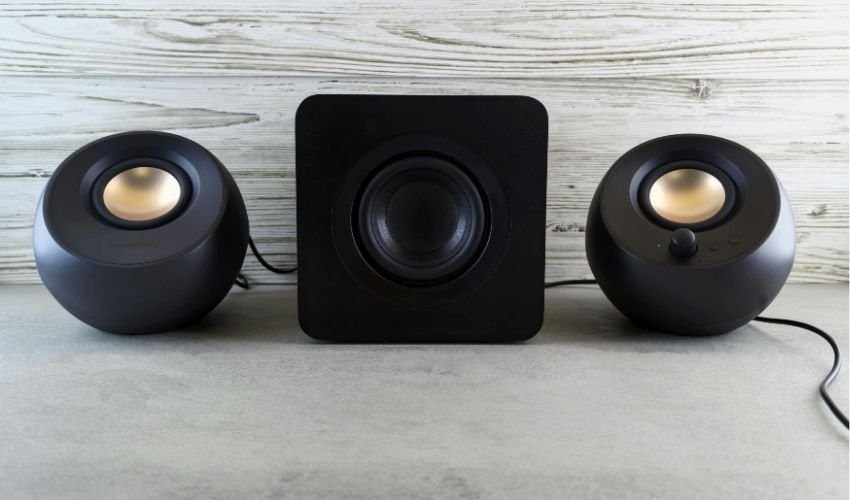
The subwoofer JBL PB10 helped bring powerful movie sound into homes during the early 2000s. At that time, many families were buying DVD players, larger televisions, and home theater speakers. People wanted more than a clear picture. They wanted to hear deep bass during action scenes, music, and exciting movie moments. A regular television speaker could not always produce those low sounds well. That is where a powered subwoofer became useful.
The JBL PB10 offered a 10-inch bass driver and a built-in amplifier rated at 150 watts RMS. It was made to add low-frequency sound to a home audio system. For people building their first surround sound setup, a product like this could make watching movies feel more exciting. Today, the PB10 is an older model, but it still tells an important story about home entertainment. It shows how one piece of audio equipment could help turn an ordinary living room into a more enjoyable place for movies, games, and music.
The Early 2000s Changed Home Entertainment
The early 2000s were an exciting time for home entertainment. DVD players were becoming common in many homes. People could watch films with better picture and sound quality than older VHS tapes often offered. Home theater receivers also became more popular. These devices helped send sound to several speakers placed around a room. Families could hear voices from the front, music from different directions, and low bass from a separate subwoofer.
This created a more complete listening experience. Before this change, many homes depended on the small speakers inside their televisions. Those speakers worked for normal programs, but they often struggled with deep sound effects. A movie explosion might sound thin instead of powerful. A deep drumbeat could lose much of its impact. The subwoofer JBL PB10 belonged to the generation of products designed to improve that experience. It gave home audio fans another way to enjoy the soundtracks they loved without needing to visit a movie theater.
What Is the Subwoofer JBL PB10?
The JBL PB10 is a powered subwoofer from JBL’s PowerBass series. A subwoofer is a speaker made to play low sounds, often called bass. These sounds include deep drums, thunder, engine noise, and some movie effects. Unlike a normal speaker, a powered subwoofer has its own amplifier inside the cabinet. This means it does not need the main receiver to supply power directly to its bass driver. The PB10 uses a 10-inch driver to move air and create low-frequency sound.
Its built-in amplifier is rated at 150 watts RMS. RMS is a way to describe continuous power, rather than a brief peak level. The PB10 also has controls that help owners match its sound with other speakers. These include level, crossover, and phase settings. Its job is not to replace the main speakers. Instead, it supports them by playing deeper sounds that smaller speakers may find hard to produce. This made it a useful part of many home theater systems.
Why Deep Bass Made Movie Nights More Exciting
Imagine watching a favorite action movie on a DVD player in the early 2000s. The television shows a car racing down a road. The front speakers play the voices and music. Then a loud engine sound fills the room. A subwoofer can add the deep part of that sound, making the scene feel fuller. This is one reason bass became important in home theater systems. It added weight to sound effects that ordinary television speakers could not easily reproduce.
The subwoofer JBL PB10 was designed to handle that low-frequency work. It could support the sound of movie effects, musical bass notes, and other deep audio. However, good bass is not just about making the room shake. It should also blend with the rest of the sound system. If the bass is too loud, it may cover voices or make music sound muddy. When adjusted well, a subwoofer can add excitement without taking over the whole soundtrack. That balance is what makes a home theater enjoyable.
JBL PB10 Specifications and Key Features
The JBL PB10 had features that made sense for the home theater systems of its time. Its 10-inch driver and built-in amplifier gave it a dedicated way to produce bass. The controls allowed users to adjust the sound for their room and other speakers. Its wired connections also made it useful with different kinds of compatible audio equipment.
| Feature | JBL PB10 Details |
|---|---|
| Brand | JBL |
| Series | PowerBass |
| Model | PB10 |
| Speaker type | Powered subwoofer |
| Driver size | 10 inches |
| Amplifier power | 150 watts RMS |
| Crossover | Adjustable |
| Phase control | Included |
| Volume control | Adjustable level |
| Connections | Line-level and speaker-level |
| Main purpose | Deep bass for music and home theater |
These features were valuable when many people were learning how to build their own home theater systems. The level control helped set bass volume. The crossover control helped decide which low sounds the subwoofer would play. The phase setting helped owners match the bass with their main speakers. Together, these controls gave users more freedom than a basic television speaker system.
The Design That Helped Create Powerful Bass
The design of the JBL PB10 was important to its sound. JBL used a driver made with pure-cellulose fiber. This material formed part of the cone that moved air to create bass. The speaker also used JBL’s FreeFlow flared port design. A port is an opening that helps the speaker cabinet produce low sounds. The shape of the port is meant to help air move more smoothly. The PB10 had a frequency response listed from 27 Hz up to its low-pass crossover setting. Hertz, written as Hz, measures how fast a sound wave moves back and forth each second.
Lower numbers describe deeper sounds. The cabinet measured about 14 inches high without its feet, 14 inches wide, and 15 inches deep. It weighed about 35 pounds. This was not a tiny speaker that could easily sit on a shelf. It needed a safe place on the floor. JBL’s original specifications show that the PB10 was built as a serious bass speaker for home use.
How the JBL PB10 Worked With Other Speakers
A good home theater needs different speakers to work together. Front speakers usually handle much of the music, voices, and other sounds. A center speaker often makes dialogue easier to hear. Surround speakers help create sounds from the sides or behind the listener. The subwoofer handles the deepest parts of the soundtrack. The subwoofer JBL PB10 could connect to compatible receivers through line-level or speaker-level inputs. Line-level connections use audio signals that have not yet been amplified to drive a speaker.
Speaker-level connections carry signals from an amplifier’s speaker outputs. The PB10 also had a setting for LFE, which means Low-Frequency Effects. This is a special audio channel used in many surround sound formats. When connected to a suitable receiver, the PB10 could play the deep effects found in movie soundtracks. Its controls helped owners adjust the bass to fit their room. This made the speaker useful in different home audio setups. However, the right connection depended on the receiver and the type of sound system being used.
Why Speaker Placement Could Change the Sound
One surprising fact about subwoofers is that their position can change how they sound. A speaker placed near a wall may produce stronger bass at certain frequencies. Moving it toward a corner can make some low sounds even louder. However, stronger bass is not always better bass. A poor position can make one bass note sound too strong while another seems weak. The room itself plays a big role because low sound waves reflect from walls, floors, and other surfaces.
This is why the subwoofer JBL PB10 should not be placed in a random spot without testing it. A simple starting point is to put it near the front speakers, leaving enough space around the cabinet and its port. Play a familiar song or movie scene and listen carefully. Move the subwoofer to another safe position if the sound seems uneven. Try listening from the main seat instead of standing next to the speaker. The goal is clear, balanced bass that supports the rest of the audio system.
How to Set Up the Subwoofer JBL PB10
Setting up the JBL PB10 does not have to be difficult. The first step is to check that the speaker, power cable, and audio connections are in good condition. Since this is an older powered subwoofer, checking its condition is especially important. The PB10 should be connected only to a suitable power supply that matches the voltage and frequency marked on the unit. A 120-volt model must not be plugged directly into a 230-volt outlet.
Next, choose the correct audio connection. For a modern receiver with a subwoofer output and its own bass management, the PB10’s LFE mode may be suitable. JBL’s manual explains that this mode bypasses the PB10’s internal crossover. If the receiver does not manage the crossover, the Normal setting may be needed instead. Start with a low volume level. Play familiar audio, then raise the bass slowly until it blends with the main speakers. This simple process helps avoid bass that is too loud or unclear.
Simple Setup Checklist
-
Check the speaker cabinet and power cord.
-
Match the unit’s power rating to the electrical supply.
-
Connect the correct audio cable.
-
Choose LFE or Normal mode for the receiver.
-
Begin with a low bass volume.
-
Adjust the crossover when using Normal mode.
-
Test both phase settings.
-
Listen from your normal seating position.
Understanding the Crossover and Phase Controls
Two useful controls on the JBL PB10 are crossover and phase. They may sound technical, but their jobs are simple. The crossover helps decide which bass sounds the subwoofer will play. The PB10 has an adjustable low-pass crossover from 50 Hz to 150 Hz. If the main speakers already produce some bass well, a lower setting may help the system sound balanced. If the main speakers are small and cannot produce much bass, a higher setting may be useful. JBL’s manual suggests different ranges depending on speaker size and ability.
The phase control has two positions, 0 degrees and 180 degrees. It changes the timing relationship between the subwoofer’s movement and the main speakers. This can affect how strong the bass sounds at the listening position. There is no single phase setting that works best in every room. Owners can test both positions and keep the one that gives smoother, stronger bass. These controls made the subwoofer JBL PB10 more flexible than a speaker with no sound adjustments.
The Role of the JBL PB10 in Music Listening
The JBL PB10 was not useful only for movies. Music also contains many low sounds that a subwoofer can help reproduce. A bass guitar, kick drum, or deep keyboard note may sound fuller when the system has a well-adjusted subwoofer. During the early 2000s, people listened to music through CDs, home stereo systems, and other audio sources. Adding a powered subwoofer could help bring out the lower parts of familiar songs. However, the best result depended on the music, the room, and the speakers already being used.
A subwoofer cannot improve a poor recording or fix every weakness in a sound system. It also should not make every song sound heavy or boomy. The purpose is to reproduce the bass that belongs in the recording. When the PB10 is adjusted correctly, it can help smaller speakers deliver a more complete sound. This is one reason a powered subwoofer can be useful for both music lovers and movie fans.
Why Vintage Audio Equipment Still Matters in 2026
Audio technology has changed greatly since the PB10’s era. Today, many people use soundbars, wireless speakers, and compact entertainment systems. Some products include automatic room correction and phone-based controls. The JBL PB10 does not offer those modern features. It is a traditional wired powered subwoofer that depends on physical connections and manual adjustments. Yet older equipment can still have value. A working subwoofer does not become useless simply because newer products have arrived.
Low-frequency sound follows the same basic rules, whether a speaker was made many years ago or today. The subwoofer JBL PB10 can still be used with compatible equipment if its parts remain in good condition. Its age does create some concerns. Electronic components can wear out, and replacement parts may be harder to find. Buyers should also remember that modern subwoofers may offer better efficiency, smaller cabinets, or more advanced controls. The PB10 is worth understanding because it represents a stage in home audio history when separate powered subwoofers helped improve home entertainment.
Common JBL PB10 Problems and Maintenance Tips
An older JBL PB10 may need more attention than a new speaker. One possible problem is weak or missing bass. This can happen because of an incorrect setting, a loose cable, a receiver problem, or a fault inside the subwoofer. Another concern is unwanted humming or buzzing. Such sounds can have several causes, including cable problems or aging electronic parts. Owners should begin with simple external checks. Make sure the receiver is sending a bass signal and that the subwoofer is switched on.
Check the audio cable and try a different suitable cable if needed. Look for damage around the speaker cone and cabinet. Keep the unit away from water, strong heat, and blocked airflow. Do not open the amplifier section to investigate an electrical fault. Powered subwoofers contain parts that can hold dangerous electrical energy even after being unplugged. JBL’s service documentation also shows that the PB10 has parts and circuits that require proper repair methods. A trained technician should handle internal electrical work.
Is the Subwoofer JBL PB10 Still Worth Buying?
Buying a used JBL PB10 can make sense for someone who wants to build a budget home theater. However, its value depends more on its present condition than on its original reputation. The first thing to check is whether the speaker works correctly. Ask the seller to demonstrate it with music or a movie soundtrack. Listen for unwanted rattling, buzzing, cutting out, or distortion. Check that the level and phase controls work and that the input connections are secure.
The cabinet should not have serious damage, and the speaker cone should move normally during playback without making scraping sounds. Buyers should also confirm the voltage rating because units made for different electrical markets may need different power arrangements. Compare the asking price with other used subwoofers in the local market. A very cheap PB10 may become expensive if it needs a new amplifier or difficult repairs. A working unit at a reasonable price may still serve a useful purpose. The important point is to buy based on condition, compatibility, and listening needs rather than nostalgia alone.
Final Thoughts
The subwoofer JBL PB10 represents an interesting part of home theater history. During the early 2000s, families were moving toward DVD movies, surround sound, and better speakers. Powered subwoofers helped make that change more exciting by adding deep sounds that ordinary television speakers often could not reproduce. The JBL PB10 offered a 10-inch driver, a 150-watt RMS amplifier, and useful controls for adjusting bass.
These features helped owners build more complete home audio systems. Today, it cannot offer every feature found in modern products, but a working unit can still have a place in a compatible setup. Its story also reminds us that better sound does not always require the newest equipment. Good speaker placement, careful setup, and balanced settings can make a major difference. For vintage audio fans, the PB10 is more than an old speaker. It is a reminder of the time when home movie nights began to sound much closer to the cinema.
FAQs
1. How powerful is the JBL PB10 subwoofer?
The JBL PB10 has a built-in amplifier rated at 150 watts RMS. It also uses a 10-inch bass driver. This combination was designed to produce deep low-frequency sound for home audio systems.
2. Can the JBL PB10 connect to a modern home theater receiver?
Yes, it can connect to many modern receivers that provide a compatible analog subwoofer output. The PB10 includes line-level inputs and an LFE setting. Check the receiver’s manual before making the connection.
3. What is the frequency response of the JBL PB10?
JBL lists the PB10’s frequency response from 27 Hz up to the selected low-pass crossover setting. The crossover can be adjusted between 50 Hz and 150 Hz in Normal mode.
4. Why does my JBL PB10 produce weak bass?
Weak bass may result from a low volume setting, incorrect crossover adjustment, poor placement, loose connections, or a receiver setting. Aging components can also cause problems. Check the simple settings first before seeking professional repair.
5. Is the JBL PB10 a good subwoofer in 2026?
A working JBL PB10 can still be useful for music and home theater. However, its age, condition, electrical compatibility, repair costs, and used price should all be considered before buying.
