

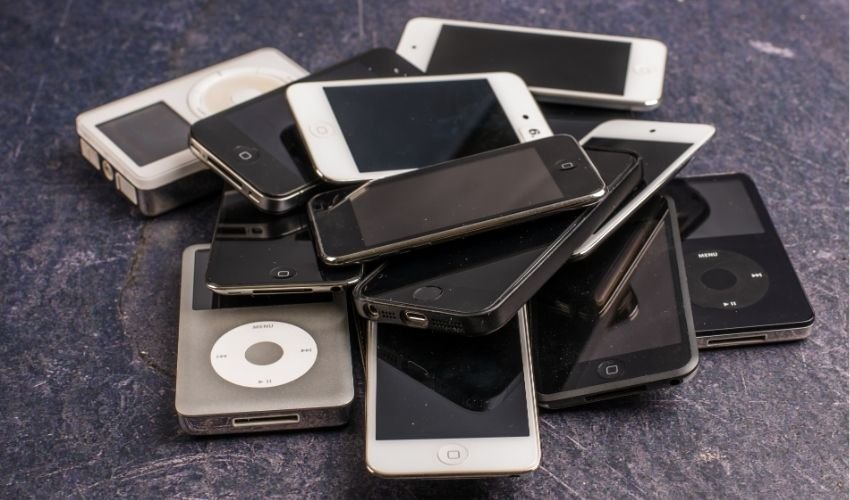
Today, talking to a phone does not seem strange. People ask phones for the weather, set alarms with their voice, send messages, and ask digital helpers simple questions. But smartphones in 2011 were different. Voice assistants were not yet a normal part of daily life. Then Apple introduced the iPhone 4S with Siri. Suddenly, a phone was not only something people touched. It was something they could talk to. For many users, this felt like a small look into the future.
Imagine Getting a New Smartphone in 2011
Picture an ordinary person walking into a phone store in late 2011. We can call him Alex. Alex is not a real person. He is an example of what many buyers may have felt at the time.
Alex has used mobile phones before. He knows how to make calls. He knows how to type text messages. He has used a camera on a phone. He may even have downloaded a few apps.
Then he gets an iPhone 4S.
Someone tells him that he can press a button and speak to the phone. At first, the idea sounds funny. Why talk to a phone when you can just type?
Alex tries it anyway.
He asks the phone about the weather. It answers.
He asks it to remind him about something later. The reminder is saved.
He tells it to send a message. The phone turns his words into text.
That simple moment helps explain why smartphones in 2011 were so interesting. People were starting to see that a smartphone could become more than a tiny computer. It could become a helper that listened to spoken words.
The iPhone 4S Brought Siri to Millions of People
Apple announced the iPhone 4S on October 4, 2011. The phone went on sale in its first countries on October 14. It had a faster A5 chip, an 8-megapixel camera, and the ability to record 1080p video. Yet one feature received a huge amount of attention: Siri.
Apple described Siri as an intelligent assistant. Users could ask it to make calls, send messages, create reminders, make notes, search the internet, find directions, and answer certain questions. Siri could also use information such as contacts and location when the user allowed it.
Those jobs may sound simple now. In 2011, they felt fresh.
Before Siri, people were already using some voice controls on phones. The iPhone 3GS, for example, had an earlier Voice Control feature for jobs such as calling people and choosing music. But Siri went further. It tried to understand normal spoken requests instead of only a small set of fixed commands. WIRED noted this difference in its 2011 review of the iPhone 4S.
That made talking to a phone feel less like giving orders to a machine and more like asking for help.
Siri Made a Smartphone Feel More Personal
The word “smartphone” had been used long before 2011. Phones could already use apps, browse websites, play games, take pictures, and send email.
Siri added another meaning to the word “smart.”
The phone could now react to the way a person spoke.
A user did not always need to open an app, find a button, and type information. The person could ask the phone to do the job.
Imagine Alex remembering that he needs to call his mother later. Instead of opening an app and typing a note, he can ask Siri to remind him.
This may save only a few seconds. But those seconds matter because they change the way people think about the device.
The phone starts to feel less like a tool that waits for taps and more like a helper that takes instructions.
WIRED’s 2011 review pointed to this benefit. The reviewer found it much quicker to create some reminders by speaking than by opening an app and typing them.
That was an important change. The biggest story was not simply that Siri could hear words. The bigger story was that voice could make common phone tasks easier.
Talking to a Phone Still Felt Strange
New technology often feels odd before it feels normal.
In 2011, speaking to a phone in public could make a person feel a little silly. Other people might think the user was talking to himself.
Apple even had a way to make the experience feel more natural. A person could bring the iPhone 4S toward the ear and speak to Siri in a way that looked more like a normal phone call. Reviews at the time noticed this small detail.
This tells us something important about new technology.
A new feature does not become normal only because it works. People must also feel comfortable using it.
Today, people often speak to phones, smart speakers, cars, watches, TVs, and other devices. In 2011, the social rules around these actions were still being formed.
Should you talk to a phone on a bus?
Should you ask Siri a question while other people are listening?
Is speaking faster than typing?
Will the phone understand your voice?
These were simple questions, but they showed that smartphones were entering a new stage.
Siri Was Impressive, but It Was Not Perfect
It is easy to look back at old technology and make it seem better than it really was. Siri in 2011 had clear limits.
Apple launched Siri as a beta feature. At first, it supported English in the United States, United Kingdom, and Australia, along with French and German. Some features also depended on location and network access.
Reviewers found that Siri could sometimes misunderstand questions. Background noise could also cause problems. Network trouble could stop the service from working correctly. TechCrunch described Siri as impressive but noted these kinds of problems soon after the iPhone 4S arrived.
So Alex, our example buyer, might ask Siri a question and get the right answer.
Then he might ask another question and get something strange.
He might laugh.
He might try again.
That imperfect experience is part of the real story of smartphones in 2011. Voice technology was exciting because people could see what it might become, even when it did not work every time.
The mistakes almost made the technology more interesting. People tested it. They asked silly questions. They showed it to friends. Talking to Siri became something people could demonstrate, not just something they used alone.
TechCrunch called Siri a standout part of the iPhone 4S and noted that it was the type of feature people wanted to show to other people.
The iPhone 4S Was More Than Siri
Siri became one of the biggest stories around the iPhone 4S, but the phone also showed how quickly smartphones were changing in other ways.
Its camera used an 8-megapixel sensor. It could record full 1080p HD video. Apple also gave it the dual-core A5 chip and faster graphics than the earlier iPhone 4.
These upgrades mattered because phones were starting to replace other devices.
A person might once have carried a basic phone and a separate digital camera. A music player could be another device. A paper map might sit in the car.
A smartphone could bring many of those jobs together.
Siri added another layer. The phone was not only replacing physical tools. It was also trying to make those tools easier to control.
A user could take a picture, find a place, send a message, listen to music, check information, and manage reminders with one small device.
This was one reason smartphones in 2011 were becoming so important in everyday life.
People Clearly Wanted the iPhone 4S
The iPhone 4S received strong early demand.
Apple said more than one million iPhone 4S units were pre-ordered in the first 24 hours. That was higher than the company’s previous one-day iPhone pre-order record.
Apple later reported that more than four million iPhone 4S units were sold during its first weekend on sale.
Of course, people were not buying the phone only because of Siri. The iPhone already had a large following. The improved camera, faster chip, iOS 5, iCloud, apps, and other features also mattered.
Still, Siri gave people something easy to understand.
A faster chip can be hard to show to a friend.
Talking to your phone and hearing an answer is easy to show.
That made Siri useful not only as technology but also as a symbol of what was changing.
Smartphones in 2011 Were Becoming Everyday Helpers
Think again about Alex using his new phone.
In the morning, he wants to know the weather.
Later, he remembers an important job for the evening.
He needs to send a quick message while his hands are busy.
He wants directions to a place he has never visited.
Each task is small.
Together, they show a big change.
The smartphone is moving closer to the center of daily life.
Earlier mobile phones were built mainly around communication. You called someone. You sent a text.
Smartphones added the internet, apps, cameras, maps, games, email, and many other tools.
Voice assistants added another idea. Instead of learning where every feature was located, a user could simply say what he wanted.
That idea would become much more important in the years that followed.
Siri Changed What People Expected From Machines
One of Siri’s biggest effects was not a single feature. It was a new expectation.
People began to expect computers to understand normal speech.
For many years, using computers meant learning how the machine worked. You learned which buttons to press. You learned menus. You learned how to type the right words into a search box.
Voice assistants tried to turn that idea around.
The machine would try to understand the person.
That sounds like a small difference. It is actually a very large one.
A child can ask a spoken question before learning how to type well. A person carrying bags may be able to speak when touching a screen is hard. Someone who finds a keyboard difficult may find voice controls easier for some jobs.
WIRED’s 2011 review even pointed to the possible value of voice tools for people who had difficulty using normal keyboards or screens.
Siri was far from perfect, but it showed why voice control could matter.
The Strange New Habit Became Normal
Technology can change our habits slowly.
At first, people may laugh at something new.
Then they test it.
Then they use it.
Finally, they stop thinking about it.
Talking to machines followed a similar path.
In 2011, Siri was interesting partly because the act of talking to a smartphone still felt unusual. Today, voice commands can be found across many types of technology.
That does not mean Siri alone created every voice product that came later. Voice recognition existed before the iPhone 4S, and many companies worked on spoken computer controls.
What Siri did was put a more advanced voice assistant into a very popular consumer phone.
That helped millions of people understand the idea.
They did not need to visit a computer lab or watch a technology show.
They could hold the idea in their hands.
A Small Step Toward Today’s AI Tools
Modern AI tools can do much more than early Siri could do in 2011.
They can work with longer questions, create text, study images, explain topics, help with ideas, and take part in much longer conversations.
It would be wrong to say Siri in 2011 was the same as today’s advanced AI systems.
It was not.
But there is an important connection between them.
Both are built around a simple human wish: people want to tell a computer what they need in ordinary language.
The iPhone 4S gave many users an early taste of that idea.
Instead of thinking, “Which menu do I open?” a person could begin with, “Can I just ask?”
That change in thinking may be one of the most interesting parts of the story.
Why Smartphones in 2011 Still Matter
Many phones from 2011 now look old. Their screens were smaller than many screens today. Their cameras were weaker. Their chips were slower. Mobile networks were different, and many modern apps did not exist yet.
But looking only at old specifications misses the point.
Smartphones in 2011 were helping change the relationship between people and computers.
The iPhone 4S showed this clearly.
Its camera made the phone more useful for everyday pictures and video. Its apps connected users to more services. iCloud helped move information between devices. Siri introduced a new way to ask the phone for help.
These changes were not only about making a better phone.
They were about making the phone part of more moments in a person’s day.
From a Fun Trick to a New Way of Using Technology
Go back one final time to Alex.
On the first day with his iPhone 4S, he talks to Siri because it is fun.
He wants to see what happens.
He asks a question.
He shows the answer to a friend.
They laugh when Siri misunderstands something.
But a few days later, Alex may stop treating the feature like a toy.
He uses it to set a reminder because he is busy.
He speaks a message because typing would take longer.
He checks information by asking instead of searching through different screens.
The fun trick has started to become a useful tool.
That is often how major changes in technology begin. A new idea looks unusual. Then people discover a small reason to use it. That small reason becomes a habit.
Final Thoughts
Smartphones in 2011 marked an important moment in mobile technology. Phones were already becoming powerful pocket computers, but the iPhone 4S added something that felt different. With Siri, many ordinary users could speak to a phone and ask it to complete useful tasks.
Siri was not perfect. It could misunderstand people. It needed network access for many jobs. It supported only a limited set of languages and services at launch. Yet those limits did not erase the larger idea.
The important change was simple: people were learning that they did not always have to type, tap, or search through menus. Sometimes they could just ask.
In 2011, talking to a smartphone could still feel strange enough to make someone laugh. Years later, speaking to digital devices became a normal part of technology for many people.
That is why the story of smartphones in 2011 is bigger than old phone models and technical numbers. It is the story of a time when a device in your pocket started to listen, answer, and feel a little more like a helper.
