

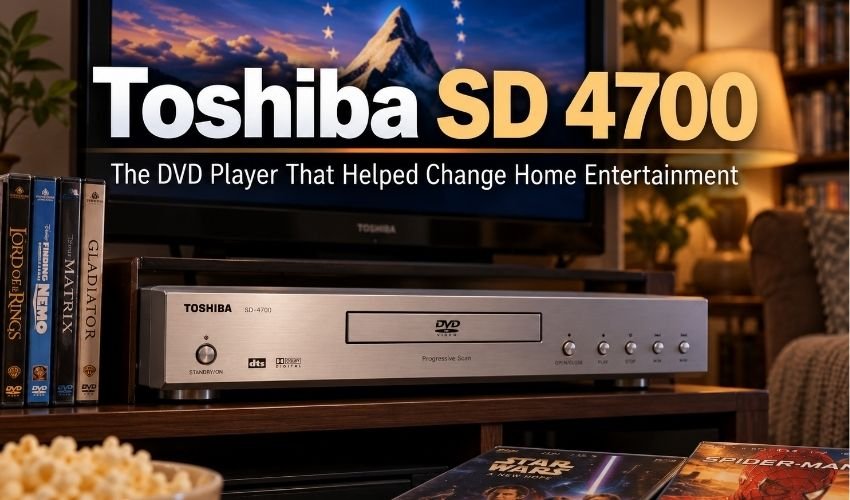
The Toshiba SD 4700 was part of a major change in home entertainment. In the early 2000s, people wanted better ways to watch movies at home. VHS tapes were still common, but DVD players were becoming more popular. They offered clearer pictures, easier controls, and better sound. The Toshiba SD 4700 joined this growing market in 2001. It was more than a basic DVD player. It offered progressive-scan video and DVD-Audio playback. These features helped make it an interesting choice for people who loved movies and music.
Today, the Toshiba SD 4700 may look like an old piece of technology. It does not have streaming apps or an HDMI connection. However, its story tells us a lot about how home entertainment changed. It shows how people moved from video tapes to digital discs. It also helps explain why some people still enjoy older DVD players. Looking back at this model gives us a clear view of a time when watching a movie at home was becoming a new kind of experience.
The Early 2000s Changed How People Watched Movies
Before DVD players became common, many homes used VHS tapes. People placed large video cassettes inside a VCR to watch their favorite films. These tapes worked well for years, but they had limits. Viewers often had to rewind a tape after watching it. Finding a favorite part of a movie could take time. Tape quality could also become worse with use. When DVD players arrived, they offered a new way to enjoy films. DVDs were smaller than VHS tapes, and viewers could move between scenes with a remote control.
DVD players entered the United States market in 1997. At first, they were costly, and not every family owned one. Over time, prices dropped and more movie titles became available. According to the U.S. Bureau of Labor Statistics, DVD player sales grew quickly in the late 1990s. By 2001, the DVD market had become a major part of home entertainment. This growth gave companies like Toshiba a chance to offer players with better picture and sound features. The Toshiba SD 4700 appeared during this important time.
What Made the Toshiba SD 4700 Special?
The Toshiba SD 4700 was a DVD-Audio/Video player introduced in 2001. It could play DVD movies and several kinds of music discs. It also offered a feature called progressive scan. This feature was useful for people who owned a TV that could accept its improved video signal. The player was made for users who wanted more from their home entertainment system without buying some of the most costly equipment available at the time.
In February 2002, Sound & Vision reported that the Toshiba SD 4700 had a listed price of $299. This placed it below many high-end home theater products. For that price, buyers could get DVD-Audio support along with progressive-scan video. The player also worked with CDs and supported MP3 music stored on compatible discs. It offered both video and music playback in one machine. That mix of features was one reason the model stood out among DVD players of its time.
How Progressive Scan Improved the Viewing Experience
Progressive scan was one of the main features of the Toshiba SD 4700. Older television systems often used a method called interlaced scanning. This method showed a picture in two sets of lines. Progressive scan displayed the lines in order during each full picture update. On a TV that supported it, this could help make the image look steadier and show fine details more clearly. It was an important feature for people who cared about picture quality.
However, progressive scan did not turn a DVD into a high-definition movie. The Toshiba SD 4700 still played standard-definition DVDs. The final picture also depended on the disc, the TV, and the way the player was connected. People needed a TV with the right inputs to use the feature. On older sets without support, they could use a standard video connection instead. This is an important part of the story because better technology only helped when the other parts of the system could work with it.
Why the Right TV Connection Mattered
The Toshiba SD 4700 offered several ways to send video to a television. These included composite video, S-Video, and component video. Each connection served a different need. Composite video used one video cable and was common on older TVs. S-Video kept parts of the picture signal separate, which could help improve image quality. Component video used three video connections and was the key option for progressive-scan output on this player.
For an early 2000s home theater fan, these choices mattered. A person with a basic TV could use a simple connection. Someone with a more advanced TV could choose component video for better results. Today, many new televisions no longer include all these older ports. That can make connecting the Toshiba SD 4700 more difficult. A suitable powered video converter may be needed to use it with an HDMI-only TV. Even with a converter, the source picture remains standard definition.
DVD-Audio Made the Player More Than a Movie Machine
The Toshiba SD 4700 also supported DVD-Audio. This was a music format designed to offer high-quality sound. A normal music CD usually carries two sound channels, one for the left speaker and one for the right. DVD-Audio could offer more channels and higher-quality audio recordings. With the right equipment and music disc, listeners could enjoy sound from speakers placed around the room.
This feature gave the Toshiba SD 4700 another purpose. It was not only for watching action films or family movies. It could also become part of a home music system. A listener could place a DVD-Audio disc into the player and hear a recording made for several speakers. Some recordings aimed to create the feeling of sitting near the musicians. The result depended on the music, speakers, and room setup. Still, this showed how companies were trying to bring new sound experiences into the home.
The Importance of Surround Sound at Home
Surround sound was becoming a major part of home entertainment in the early 2000s. Many people wanted movie sound that felt closer to what they heard in a cinema. Instead of using only two speakers, home theater systems could use speakers at the front, sides, or rear of a room. A separate speaker called a subwoofer could handle deep sounds. This made it possible to hear film effects from different directions.
The Toshiba SD 4700 included 5.1-channel analog audio outputs. These allowed it to connect to a matching audio receiver or amplifier. The number 5.1 means five main sound channels and one channel for deep bass. The player also offered optical and coaxial digital audio outputs. For full DVD-Audio playback through its analog connections, users had to select the correct sound setting. These details may seem small today, but they gave owners more ways to build a home theater system.
A New Kind of Family Movie Night
The move from VHS tapes to DVDs changed the way people could enjoy a movie night. Imagine a family in 2002 choosing a film for the evening. With a DVD player, they could place a small disc in the tray and use a menu to start the movie. If someone wanted to see a favorite scene again, they could use chapter controls. There was no need to rewind a long tape. This example shows how DVD technology could make home viewing easier.
The Toshiba SD 4700 was part of this wider change. It offered the tools people needed to use DVD menus, move between scenes, and enjoy movie sound through a home audio system. DVD releases also often included extras, such as interviews or scenes that did not appear in the main film. The extras depended on the disc, but they gave viewers more to explore. Watching a movie at home was no longer only about pressing play. Families could choose how they wanted to enjoy the disc.
Easy Controls Were an Important Benefit
A home entertainment product needs to be easy to use. The Toshiba SD 4700 offered a remote control and on-screen menus for common tasks. Users could start or stop a movie, pause a scene, and move to another chapter. The player’s setup menus also helped owners choose picture and sound options. Its original remote control model was listed as the SE-R0050. Having the correct remote could make it easier to use the player fully.
In its 2002 review, WIRED praised the Toshiba SD 4700 for its simple setup and clear rear panel. This was important because home theater systems could be confusing. Some people had to connect a TV, DVD player, speakers, and receiver. Each part needed the correct cable and setting. A clear menu could make these tasks less difficult. It also helped users try features they might otherwise ignore. Good design was not only about picture quality. It was also about making the player easier to enjoy.
The Toshiba SD 4700 and the Growing DVD Market
The success of DVD technology did not happen overnight. Companies worked to make players more useful while bringing prices down. At the same time, movie studios released more films on DVD. This gave buyers a stronger reason to move away from tapes. The growth was fast. Industry figures published by the Consumer Electronics Association showed that about 8.5 million stand-alone DVD players were shipped to U.S. retailers in 2000. That was a major rise from the year before.
The Toshiba SD 4700 entered a market where buyers were starting to expect more than simple DVD playback. Some wanted better pictures. Others wanted music features or surround sound. Toshiba tried to meet several of these needs in one product. The model did not create the DVD revolution by itself. It was one of many players that helped bring advanced features to more buyers. Its place in history is best understood as part of a much larger change in how people watched and listened at home.
Why DVD Players Became More Affordable
Early DVD players could cost several hundred dollars. This made them a large purchase for many families. As the market grew, companies had stronger reasons to make less costly models. New parts, more factories, and growing competition helped bring prices down. By the early 2000s, buyers had more choices. They could choose a basic DVD player or spend more for features such as progressive scan and DVD-Audio.
The Toshiba SD 4700 showed how some advanced features were moving into less costly products. Its $299 listed price in early 2002 was not cheap for every buyer, but it was far below the price of some premium audio players. In the same year, WIRED compared it with much more costly DVD-Audio machines. The review saw it as an affordable way to try six-channel music. This was an important change. Features that once seemed limited to costly home theater systems were becoming available to a wider group of people.
How the Toshiba SD 4700 Compared With Older VCRs
The Toshiba SD 4700 and a VHS player did many of the same basic jobs. Both allowed people to watch movies at home. However, they worked in different ways. A VCR used magnetic tape. A DVD player used a laser to read data from a disc. This meant DVDs did not need rewinding. A DVD could also provide chapter menus and different sound options, depending on the film. These features made movie playback easier and gave viewers more control.
There were limits, though. A common VHS recorder could record television shows onto a tape. The Toshiba SD 4700 was a playback device, not a DVD recorder. It could not simply replace every VCR task. People who wanted to record TV still needed other equipment. This is a useful reminder that new technology does not always do everything older technology can do. Even so, DVD players became popular because they offered a more convenient way to watch films.
The Challenges of Early DVD Technology
The Toshiba SD 4700 was not perfect. Early DVD players could face disc problems, setup issues, and limits linked to the TV being used. Some discs might not play because of their condition or recording format. DVD region codes could also stop a disc from playing on a player made for another region. Picture quality could change depending on the video output and display. These problems were not always caused by a broken player.
Old discussions from home theater users show that opinions about the SD 4700 were mixed. Some owners liked its features and value. Others reported concerns about picture quality or disc playback. These are reports from individual users, not proof that every unit had the same problem. Still, they show why reviews and real use mattered. Buyers had to think about more than a product’s feature list. They also had to consider how well the player worked with their own equipment.
Why Physical Media Still Has Value
Streaming has made movies and music easier to find. People can watch films on a phone, tablet, or smart TV. However, physical discs still offer some benefits. A person who owns a DVD can often watch it without an internet connection. They do not need to wait for a film to load from an online service. They also do not have to worry about that disc being removed from a streaming catalog. The player and disc must still work, of course.
This is one reason older players like the Toshiba SD 4700 can still be useful. People who keep DVD collections may enjoy having a separate machine for them. Some also like the printed disc covers, menus, and special features. These details can make watching a movie feel different from choosing a title on a streaming screen. Physical media does take up space, and discs need care. Even so, the choice to keep a movie collection remains meaningful for many film fans.
Can You Still Use the Toshiba SD 4700 in 2026?
Yes, a working Toshiba SD 4700 can still play compatible discs in 2026. The main issue is connecting it to a suitable TV or sound system. It does not have an HDMI output. If a television has component video or composite video inputs, a direct connection may be possible. A television with only HDMI inputs will usually need a suitable active converter. Users should check that the converter accepts the type of video signal being used.
Before using an older DVD player, it helps to check its condition. A player that has been stored for many years may have dust, worn parts, or a weak disc-reading system. It is wise to test it with a clean, compatible disc. The player should sit on a flat surface with space for air to move around it. If the power cord is damaged, do not use it. Never open the player to repair its laser or power parts without proper training.
Basic Setup Tips for Today’s Users
To get started with a Toshiba SD 4700, follow these simple steps:
-
Check the power cord and the player’s condition.
-
Find the video inputs on your TV.
-
Choose a matching cable or a suitable powered converter.
-
Connect the audio outputs to your TV or sound system.
-
Select the correct input on your television.
-
Choose the correct video output mode on the player.
-
Insert a clean DVD and test the picture and sound.
If the picture does not appear, check the TV input and the player’s video setting. If there is no sound, check the audio cables and output menu. The original manual is useful because it explains the different connections and settings. Always choose a setting that matches the equipment you have.
What Collectors Should Check Before Buying One
A used Toshiba SD 4700 may interest people who collect old electronics or build retro home theaters. However, age can affect how a DVD player works. Before buying one, ask whether it has been tested with a DVD movie and a music CD. Check that the disc tray opens and closes without trouble. Listen for unusual sounds while a disc is loading. It is also helpful to see the picture working on a TV rather than relying only on a seller’s description.
The remote control is another important part to check. Some setup features may be harder to reach without it. Buyers should also look at the rear connections and make sure they are clean and undamaged. A low price is not always a good deal if repairs are needed. Parts for older players may be difficult to find. Anyone buying the Toshiba SD 4700 today should see it as a used piece of technology, not a new product with modern support.
What the Toshiba SD 4700 Teaches Us About Technology
The Toshiba SD 4700 shows how quickly home entertainment can change. In 2001, progressive-scan DVD video and DVD-Audio were important selling points. Today, many people watch films in high definition or 4K, and music is often streamed online. Features that once felt new are now part of technology history. Yet the basic goal remains the same. People want to see a good picture, hear clear sound, and enjoy their favorite stories with little trouble.
This DVD player also shows that useful products do not need to be the most costly ones. Toshiba brought several advanced features together in a model aimed at a wider group of buyers. Some features, like DVD-Audio, did not become the main way people listened to music. Other ideas, like better picture output and easier menus, remained important. The Toshiba SD 4700 is a good example of both the success and the limits of early digital home entertainment.
Final Thoughts
The Toshiba SD 4700 is more than an old DVD player. It represents an important time in home entertainment history. In the early 2000s, families were moving from VHS tapes to DVDs. People wanted better pictures, clearer sound, and easier ways to enjoy movies. The Toshiba SD 4700 offered features that reflected those needs, including progressive-scan video, DVD-Audio, and surround sound connections.
The model did not change the entertainment world on its own. It was part of a larger shift that made digital home viewing more common. Looking back at it helps us understand how today’s entertainment systems developed. For some people, the Toshiba SD 4700 is still a useful disc player. For others, it is a reminder of a time when a new DVD player could make movie night feel special.
FAQs
1. What is the Toshiba SD 4700?
The Toshiba SD 4700 is a DVD-Audio/Video player introduced in 2001. It was designed to play DVD movies, music CDs, and other supported discs. It also offered progressive-scan video output and several audio connections. These features made it useful for people building home theater systems in the early 2000s.
2. Does the Toshiba SD 4700 support progressive scan?
Yes. The Toshiba SD 4700 supports progressive-scan video through its component video output. This feature can help improve picture display on a compatible TV. It does not turn a standard DVD into a high-definition disc. The quality depends on the video source, player settings, and television.
3. Can the Toshiba SD 4700 play music CDs?
Yes. The Toshiba SD 4700 can play standard audio CDs. It also supports DVD-Audio discs and compatible MP3-encoded discs. This makes it useful for both movies and music. The exact sound experience depends on the disc and the audio equipment connected to the player.
4. Does the Toshiba SD 4700 have HDMI?
No. The Toshiba SD 4700 was made before HDMI became common on home DVD players. It uses older video outputs, including composite, S-Video, and component video. People using a modern HDMI-only television will need a suitable converter to connect the player.
5. Is the Toshiba SD 4700 worth keeping today?
The Toshiba SD 4700 may be worth keeping if it still works and you own compatible discs. It can also be interesting for collectors and people who enjoy vintage home entertainment equipment. However, it lacks modern streaming features, HDMI, and high-definition disc playback. Its value depends on your needs and the condition of the player.
Sources and Further Reading
-
Toshiba SD-4700 Owner’s Manual
-
Sound & Vision: Toshiba SD-5700 and SD-4700 Features
-
WIRED: DVD-Audio Players Review, February 2002
-
U.S. Bureau of Labor Statistics: DVD Player Market History
